

Trail
Saturday dance class
This trail starts with young dancers in Lowell and an apsara in New York poems. It goes to the court dance of Cambodia and the Apsara Dance, one of its national symbols, back to the dancers carved at Angkor, through the years when most court dancers died, and forward to the survivors and teachers who carried the dance on in Cambodia.
Here
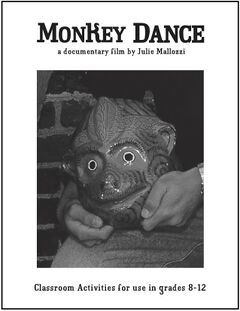
Monkey Dance
Three teenagers in Lowell, Massachusetts, dance with the Angkor Dance Troupe, and the dance ties them to their parents' culture.
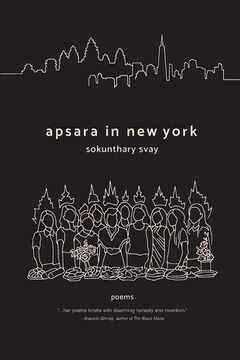
Apsara in New York
Sokunthary Svay writes of the apsara, which decorates most Khmer temples, dropped into the rush of New York as an image of her heritage.
There
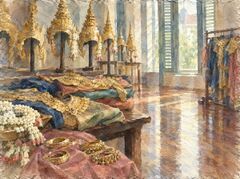
Cambodian classical dance
The court dance of Cambodia, bound to the Khmer court for more than a thousand years and inscribed by UNESCO in 2008.
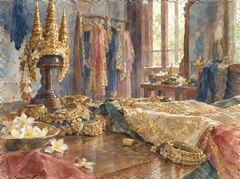
Robam Tep Apsara
The Apsara Dance, a national symbol, created in its modern form under Queen Sisowath Kossamak, in costumes modeled on the apsaras of Angkor Wat.
Then
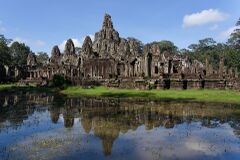
Bayon
Jayavarman VII's state temple, built around 1200, where groups of apsaras, celestial dancers, stand on lotuses on the pillars of the entry towers.
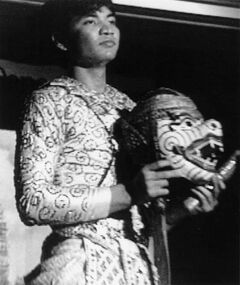
Dancing Through Death: The Monkey, Magic & Madness of Cambodia
The dancer Thavro Phim and the court dance's survival: the film puts the loss at nearly 90 percent of court dancers between 1975 and 1979.
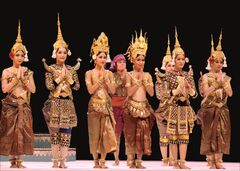
Royal Ballet of Cambodia
Before the war the troupe had nearly 300 dancers, musicians and singers; Princess Buppha Devi later said 40 dancers survived, and troupes re-formed after 1979.
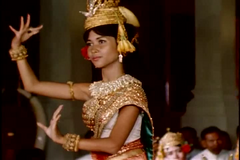
Norodom Buppha Devi
Prima ballerina of the Royal Ballet of Cambodia in the 1960s, she returned from exile in 1991, led its revival and oversaw the training of a new generation.
Now

Cambodian Living Arts
Founded in 1998 by the musician Arn Chorn-Pond, a genocide survivor, it trains artists and offers them paid work through regular performances and festivals.
Dance troupes and other arts groups are listed in the directory.