
Belief and arts
Crafts
Weaving and silk, silverwork, pottery, carving and the other Khmer handicrafts.
Pidan, also called hol pidan, is a Khmer pictorial silk hanging, woven in weft ikat and traditionally hung in Buddhist pagodas.[1][2] Beside such silks, the krama is a cloth worn by men, women and children of every class, and UNESCO inscribed its practices in 2024.[3][4]
Key articles: Khmer traditional clothing · Sampot · Sbai · Krama · Hol · Pidan · Chorabap · Palm sugar production · Kantel · Khleng Ek
A place to begin
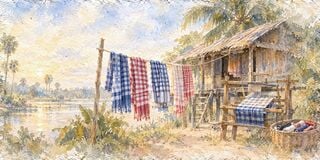
Krama
In 2024 UNESCO inscribed the practices around the krama on its list of the Intangible Cultural Heritage of Humanity.
Pidan
Until the early 1970s, village women wove pidan and gave them to the nearest pagoda or monastery to make merit.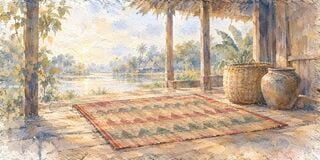
Kantel
In 2023, a weaver said a typical palm-leaf mat is about 1.5 by 2 meters (4.9 by 6.6 feet) and takes two weeks.
Khleng Ek
The first national kite festival was held in Phnom Penh in 1994, with flyers from nine provinces.All 2 articles
Help this guide grow
KhmerConnection is a community-edited wiki. Add a missing listing, correct a detail or share a source.
References 4
- ↑ Cooper Hewitt, Smithsonian Design Museum, Magali An Berthon, Hol Pidan: An Otherworldly Cambodian Experience (September 17, 2018)
- ↑ The Cambodia Daily, Michelle Vachon, Weaving Pidan (April 30, 2014)
- ↑ Khmer Culture, The checkered cloth of a nation: the story of the Cambodian krama (2025)
- ↑ UNESCO Intangible Cultural Heritage, Cultural practices and expressions linked to Krama, a traditional woven textile in Cambodia (undated)