
Belief and arts
Visual arts and architecture
Temples and monuments, sculpture and painting, and buildings from Angkor to modern Phnom Penh.
Angkor was the capital of the Khmer Empire from the 9th to the 15th century,[1][2] and its largest temple, Angkor Wat, was built between about 1113 and 1150.[3][4]
Key articles: Angkor · Angkor Wat · Bayon · Banteay Srei · Ta Prohm · Phnom Bakheng · Pre Rup · Royal Palace · New Khmer Architecture · Independence Monument · Vann Molyvann · Vann Nath · Cambodian Wooden Houses: 1,500 Years of Khmer Heritage · Khmer lintel (British Museum)
A place to begin
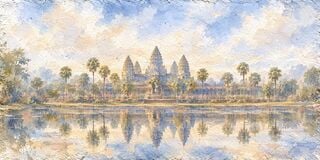
Angkor Wat
Suryavarman II built Angkor Wat between about 1113 and 1150.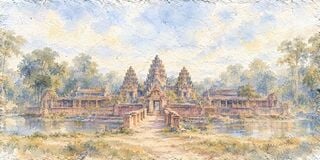
Banteay Srei
A royal teacher founded Banteay Srei, which was consecrated on April 22 or 23, 967.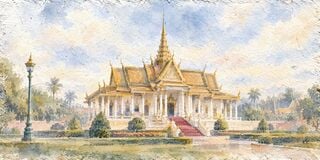
Royal Palace
The main halls of the Royal Palace went up under King Sisowath between 1913 and 1919.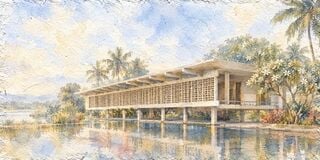
New Khmer Architecture
The modern architecture movement ran from independence in 1953 to 1970.All 4 articles
Also listed here
Pages that belong to another section and touch this one.
Help this guide grow
KhmerConnection is a community-edited wiki. Add a missing listing, correct a detail or share a source.
References 4
- ↑ UNESCO World Heritage Centre, Angkor (undated)
- ↑ Encyclopaedia Britannica, Angkor (July 20, 1998)
- ↑ Cornell University blogs, Majestic Angkor Wat: CNI Master Class in Siem Reap (February 26, 2011)
- ↑ Music in Art (Research Center for Music Iconography, City University of New York), Martin Knust, Urged to Interdisciplinary Approaches: The Iconography of Music on the Reliefs of Angkor Wat (2010)