

Place trail · 6 stops
The great lake that runs backward
Property "TrailClosing" (as page type) with input value "More on the river's people and their food is in the trail The kitchen table." contains invalid characters or is incomplete and therefore can cause unexpected results during a query or annotation process.
For part of each year the Tonle Sap River runs backward. This trail follows that water from the Mekong at Phnom Penh onto the lake and to two provinces near its shore, and ends at the festival held when the river turns.

Mekong
At Phnom Penh it meets the Tonle Sap River. From June to October the swollen Mekong pushes water up that river into the lake.

Tonle Sap
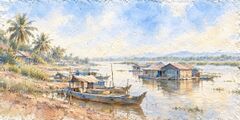
From about November to May the river turns and drains the lake back into the Mekong. People live on the lake in floating and stilt villages.
Kampong Chhnang
Its name is given as "Port of Pottery". Potters there shape clay without a wheel, walking in circles around it, and fire each piece in an open fire.

Pursat
A legend of a bodhi tree that drifted against the current gave the province its name, and it is known for its marble carving.
Boat racing at Bon Om Touk
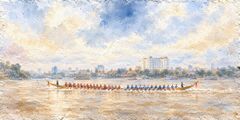
A racing boat belongs to a pagoda and its village. Crews race from Pchum Ben to the end of Buddhist Lent, and winning boats go on to the royal races.

Bon Om Touk
At the full moon of Kadeuk, when the river changes direction, the festival brings boat races, lanterns on the water, ambok and the worship of the moon.
End of the trail
More on the river's people and their food is in the trail The kitchen table.
Other trails through these places

Know something we're missing? Send a tip